

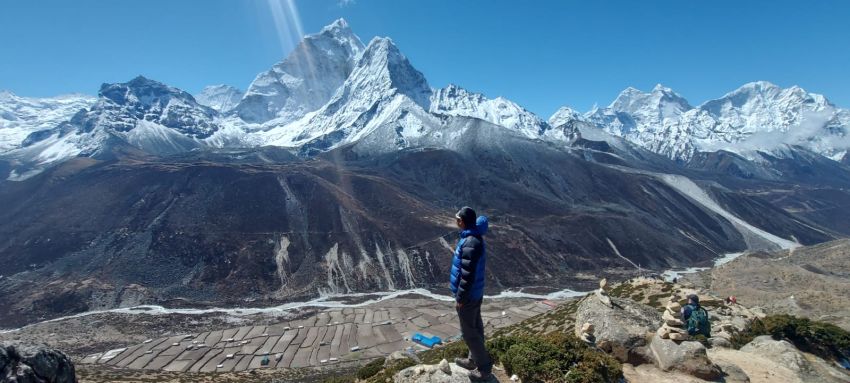
So it’s no surprise that hiking to Everest Base Camp is a bucket list dream for trekkers around the world. That journey challenges your endurance – physical and emotional, as you tolerate demanding conditions. Sure, nothing beats the thrill of standing at the base of the world’s highest peak, but that further comes down to having all the gear required for an expedition-style of climbing.
The wrong gear can turn your adventure from excellent to a hassle. Each item that you carry, from clothes to gadgets, counts. In this guide, you’ll learn how to hack your essentials and make responsible choices so you can focus on the adventure — not feeling bad.
Understanding the Environment and Terrain
Before packing, it can be helpful to know what the conditions will be. The Everest Base Camp trek passes through a variety of climatic zones from sub-tropical to arctic at the foot of Everest. It is possible to be quite remarkable, especially at night and when the big wind comes off, the worst of what feels like cold arrives.
The terrain is mixed as well – we have rocky trails, snowy paths, and hills. Since it is the knowledgeable period, they help in selecting durable and versatile tools ideal for the situation. Choosing a kit thinking only about what it looks like, or reaching for a general-purpose trekking list, could leave you underprepared.
Investing in Quality Footwear
You can never get too good a pair of shoes! One of those packs will have a telephoto lens clipped to the outside, and laps will get covered in a choking, stabbing cloud of dirt and dust. Your feet will bear the brunt of it, pushing you over some of the gnarliest trails on planet Earth, oftentimes for hours a day.
Footwear: High ankle trekking boot: Most trekkers prefer to choose high ankle trekking boots as it not only provides more grip but also support to the ankles. Also, consider those socks you’re wearing inside your shoes. Wool or a synthetic that wicks moisture and provides cushioning can go a long way on those all-day walks.
Layering Clothing for Adaptability
Layering is a massive part of trekking gear strategy. You pile on clothes and take them off again to keep warm and avoid hypothermia for a good reason. Start with a wicking base layer to remove sweat from the body. Wear an insulating mid-layer (such as fleece or down) over this.
Finally, layer your waterproof and windproof outer shell to protect yourself from snow, rain, or wind. As it is a moisture absorber, cotton increases the likelihood of cold-weather pet-related conditions. Accessories, too — like gloves, hats, and buffs — become part of the equation for protecting extremities even more prone to freezing at high elevation.
Choosing the Right Backpack
A quality backpack is not just a bag; it’s your mobile home. 40-60 litres of volume hand-sized backpacks are best for trekking to the Everest Base Camp, where you can store clothes, gear, and personal stuff in an easy way. Soft padding in the shoulder straps, belt adjustments at the hips, and multiple bags save you well. Also consider a rain cover or water-resistant housing to keep your kit dry in the event of changing weather. In short, an intelligently organized bag crosses off one less thing to agonize over while backpacking and makes sure you’re not “looking” for stuff when it really matters (say in an emergency).
Sleeping Systems and Accommodation Gear
Most trekkers on the trail stay in teahouses, but you’ll still need a decent sleeping system. The teahouses are often colder than you would anticipate and will appreciate a good sleeping bag rating for minus 10 to minus 15 degrees Celsius. Down-dressing luggage is going to offer you excellent insulation-to-weight, but be drastically less durable, and they’re greater hard to keep in moist environments if you need synthetics.
You may also need to remember to pack a small napping mat, as a way to offer greater insulation and luxury, especially in case you face wood or stone floors at mountain huts. How well rested one is has a significant impact on energy and performance during an extended high altitude walk, making sleeping gear less of a luxury here.
Essential Trekking Accessories
The right accessories for a safer, more comfortable hike. Poles should be highly recommended; they stabilized me on the descents of both Maroon and North Maroon, which also helped my knees. Sunglasses. The sun’s rays are intense at altitude so clear or slightly tinted glasses are best for seeing where you’re stepping, especially if trekking in snow and when the light reflects it can cause snow blindness. Even the little details like headlights, pocket knives, and trekking maps can make a world of difference to a trekker’s “experience”.
Technical Gear for High-Altitude Safety
For trekkers who will be heading to higher elevations or who want to do a little exploration off the main base camp route, technical gear is required. Crampons, ice axes, and harnesses might also be needed in the harder sections of the trek, especially in glacier areas. Altimeters and GPS watches can be crucial tools for keeping track of elevation gain and direction, particularly in the case of navigation across a new land.
Even if you’re not planning to climb higher than advanced base camp, bringing along some decent lightweight gear, like the Patagonia Down Sweater Pullover, means you’ll be ready for anything meteorological flip-outs or unexpected obstacles thrown your way. “Projectomancy with technical safety is foresight, and greatly reduces Thor risk when traveling through.”
Packing Smart and Minimizing Weight
Packing, it seems, is always a game of calculation between preparation and overextension. The heavier you are, the more tired (not a real word) you will be, progress more slowly, and the chances of injury increase. It comes down to self-control, like any multi-use item. For example, if you pack a lightweight insulated jacket and wear it as an insulator, that can double-duty as both your outer garment and a mid-layer, so that you can leave one behind.
Featuring a new zipper pull design, our ultra-stuff sack also pulls in 30% more, so you can really pack it all in, and your organized clothes will take up less space. Don’t forget, every kilogram counts at high altitudes: invest in quality, not quantity & leave anything that you are happy to sleep in the snow without- begin with what keeps you safe, warm, and works.
Technology and Communication Gear
A part of the enchantment of the backcountry is disconnecting from technology, but gadgets could make a desolate tract journey more secure and more efficient. Smartphones with offline maps, to keep a charge and tour light at the same time. Also, trekking apps to follow trails and “read” untrodden paths.
Satellite communication devices & gps trackers also make excellent emergency backup for anyone who wants the peace of mind that comes with always being able to safely send an sos, check in with family or friends, and let them know you’re ok if the unexpected occurs while you’re beyond the mobile phone range. Cameras and action cameras are not necessary, but they do help to record some of the memories on this truly once-in-a-lifetime adventure. The goal is to chase convenience with necessity — viewing technology as a tool for improving the trek, not spoiling it.
Final Thoughts
Picking the proper gear that you really have to have for a successful Everest Base Camp trek is all about planning and making decisions on how you are going to cope with the high altitude conditions in front of you. Boots, layered clothing, and a durable pack are the essentials of being comfortable; accessories, sleep systemsand technology-rich goods add on layers of comfort and safety. Paying attention to the weather, staying light, and packing smart can be key to your train trek.
At the end of the day, investing in gear that you are comfortable using is an investment in your safety, comfort, and fun. When your kit is as good as it gets, and the awe-inspiring views and cultural riches of the Khumbu await, along with the knowledge that you’ve made it to Everest Base Camp, it’s time to make yourself a cuppa.
Anyone fit enough can hike the Himalayas, with being well prepared, a comfortable senior not only survives a trek but enjoys it, and in so doing gets to take an adventure holiday life to remember. The right gear helps you bear those difficulties, and it allows you to concentrate on the fantastic experience out there – not annoyances with your trail equipment. Every decision you’ve been faced with: your high-altitude boots, what to do with your sleeping bag — it all adds up to making the whole Everest experience not only achievable but extraordinary.
Why Choose an Everest Base Camp Trek with Helicopter Return?








Dodaj komentar